
-

Clinical Safety Outcomes: CMO Peer Evaluation Guide
Key Takeaways Your quality committee needs a peer clinical safety outcomes summary they can evaluate with the same rigor they apply to any clinical intervention. Here’s why that’s urgent: behavioral health facilities face 110.4 violent incidents per 10,000 workers, the highest rate in healthcare [1]. That rate is exactly why quality committees demand structured evidence…
-

Security Safety Outcomes: Peer Reference Guide for CSOs
Key Takeaways To build a budget case your COO will approve, you need peer security data from comparable behavioral health facilities. Impressions from a conference hallway won’t survive the scrutiny. This guide gives you a repeatable process for collecting security safety outcomes from peer directors, interpreting what you hear, and packaging findings that connect to…
-

Nursing Safety Outcomes: Peer Data Collection Guide
Key Takeaways To build a safety case your CEO will fund and your nurses will believe, you need peer nursing safety outcomes from similar behavioral health facilities. A step-by-step collection process, built from peer nursing leaders with verified metrics, is what holds up in a budget meeting and on the unit floor. Facilities using documented…
-
Executive Safety Guide: Structured Peer References for Safety Investment
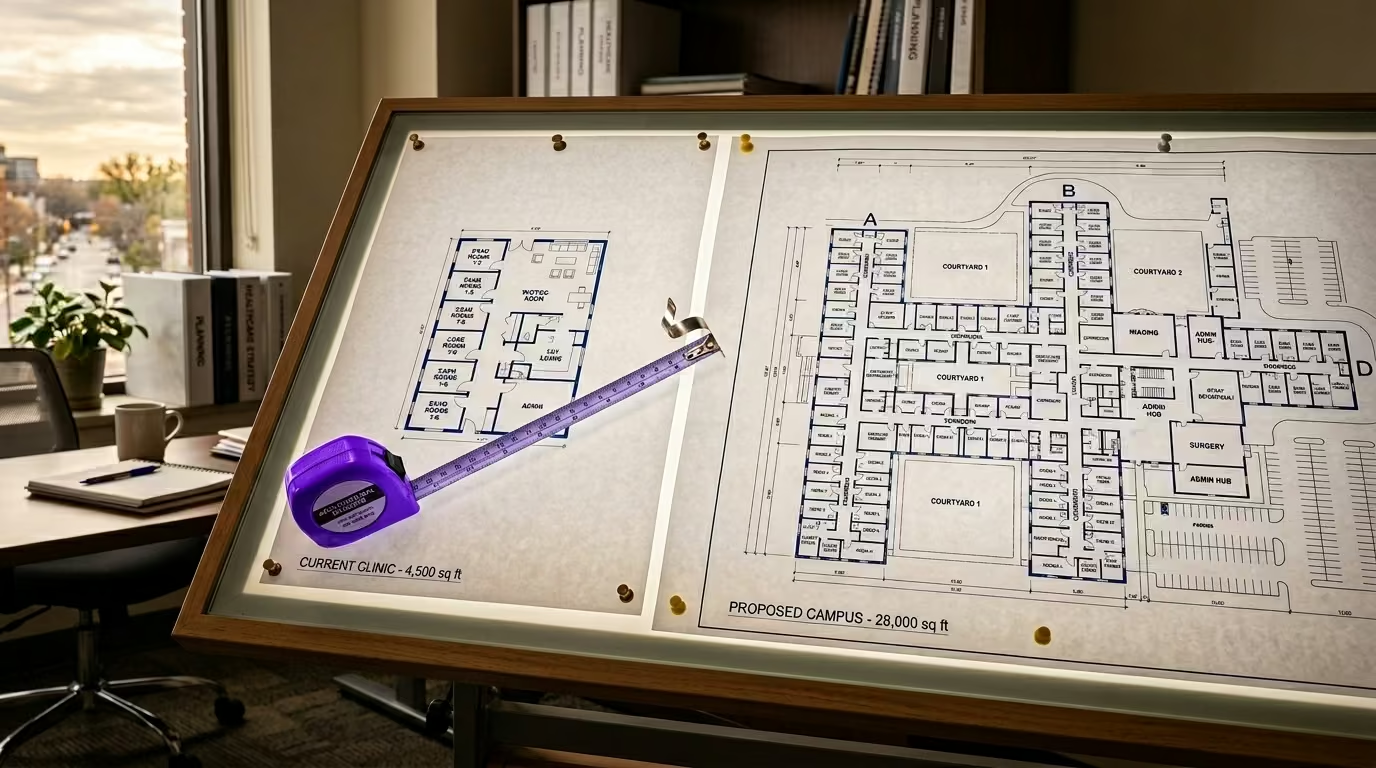
Key Takeaways Your board won’t approve a safety technology investment based on “peers liked it.” They need matched organizations, specific outcomes, and documented findings. This executive safety guide gives you a repeatable reference process you can delegate. Every peer conversation produces comparable data instead of reassuring anecdotes. What Structured References Deliver Structured references produce specific…
-
Workforce Turnover Safety: Full Cost Calculation
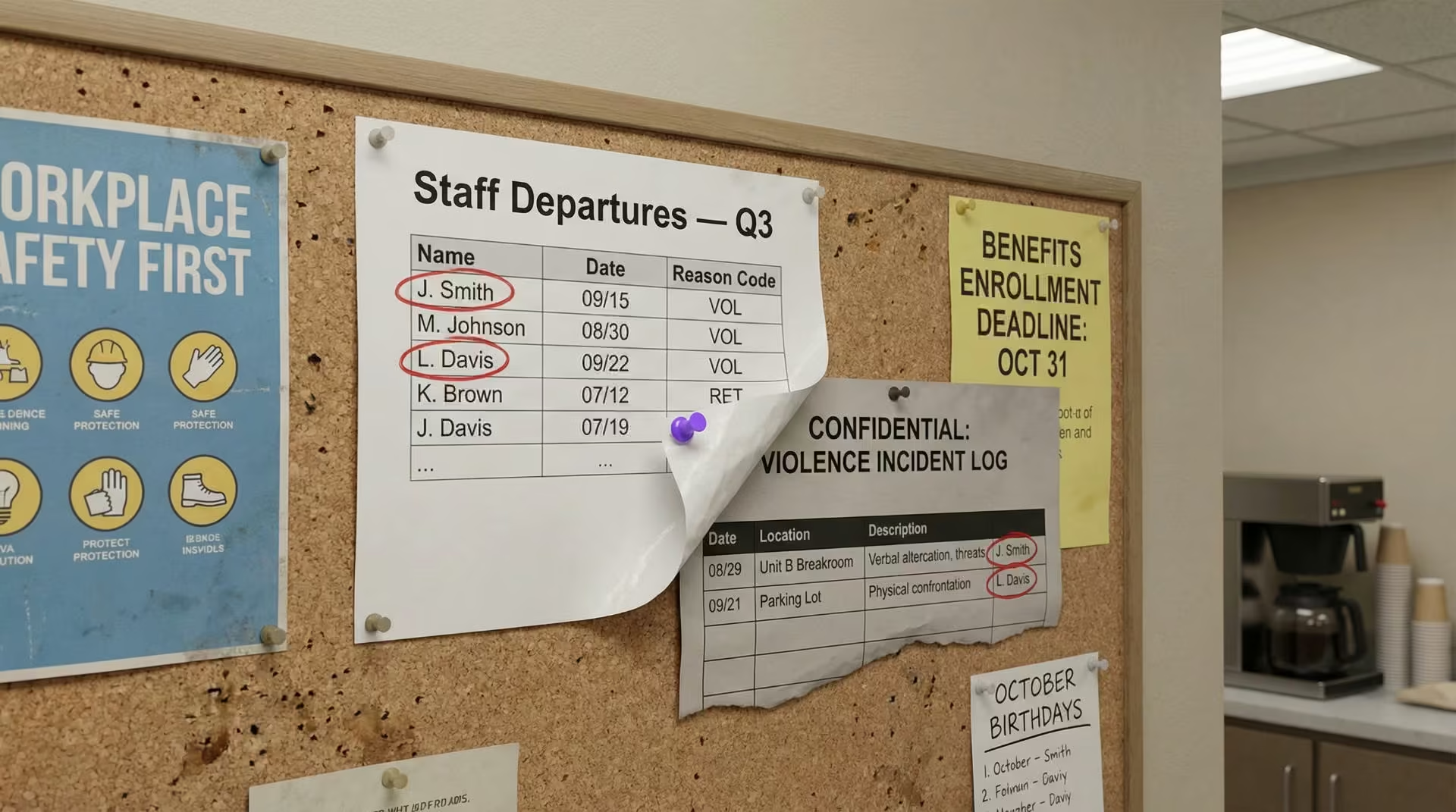
Key Takeaways When your CFO asks what nurse turnover actually costs your behavioral health facility, what number do you give? If you’re citing the $61,110 industry benchmark, you’re understating the problem [1]. Behavioral health adds extended orientation, longer vacancies, and violence-driven departures that push the real cost significantly higher. But the bigger issue isn’t the…
-

Executive Safety Guide: Turnover Cost Framework
Key Takeaways Your board chair calls the evening before the quarterly meeting. She’s seen the agency staffing variance and wants to understand why turnover keeps outpacing every projection you build. You have the number. What you may not have is the framework that connects it to a controllable cause. This executive safety guide walks through…
-

Safety Cost Analysis: Nurse Turnover Framework
Key Takeaways You already know turnover is expensive. What you probably don’t have is a number your board will trust. Not an industry average. Your number, built from your data, covering costs most calculations miss entirely. The full financial picture of nurse duress and turnover frames why this calculation matters at the board level. This…
-

Nursing Unit Safety Turnover Costs: 5 Categories
Key Takeaways Your acute psychiatric unit lost four nurses last quarter. Finance applied the hospital-wide replacement average of $61,110 per departure, projected $244,440, and moved on. But you know that number is wrong. Your unit’s eight-week orientation, the months before new hires can handle a full patient load independently, and travel nurses covering vacancies at…
-

Workforce Retention Safety: Measure Perception Risk
Key Takeaways Most facilities track turnover after staff leave. This guide shows you how to measure the safety perception that predicts departures months earlier, so you can intervene before vacancy data confirms what your nurses already decided. You’ll walk away with a specific instrument selection, delegation structure, implementation timeline, and the connection between perception scores…
-

Nursing Safety Program: Unit-Level Perception Guide
Key Takeaways Your incident reports show nothing alarming. Your engagement survey scores look acceptable. Yet the resignations keep coming from your behavioral health units, and exit interviews keep circling back to safety. The disconnect is a measurement problem. A nursing safety program built on incident counts and annual engagement composites can’t surface what’s actually driving…
