
ENTERPRISE HEALTHCARE SAFETY PLATFORM
Protect the people who protect everyone else with our staff duress system.
Healthcare workers face violence at four times the rate of any other industry. When an incident happens, three things determine the outcome: how fast help arrives, whether the system worked in that corner of the building, and whether your staff trusted it enough to press the ROAR button.
ROAR’s wearable alert system runs on a Bluetooth mesh network completely off your IT infrastructure — no Wi-Fi, no dead zones, no single point of failure. Room-level location accuracy means responders know exactly where to go. Every deployment is designed from your floor plans, installed by our team, and backed by outcome guarantees — not just a warranty.
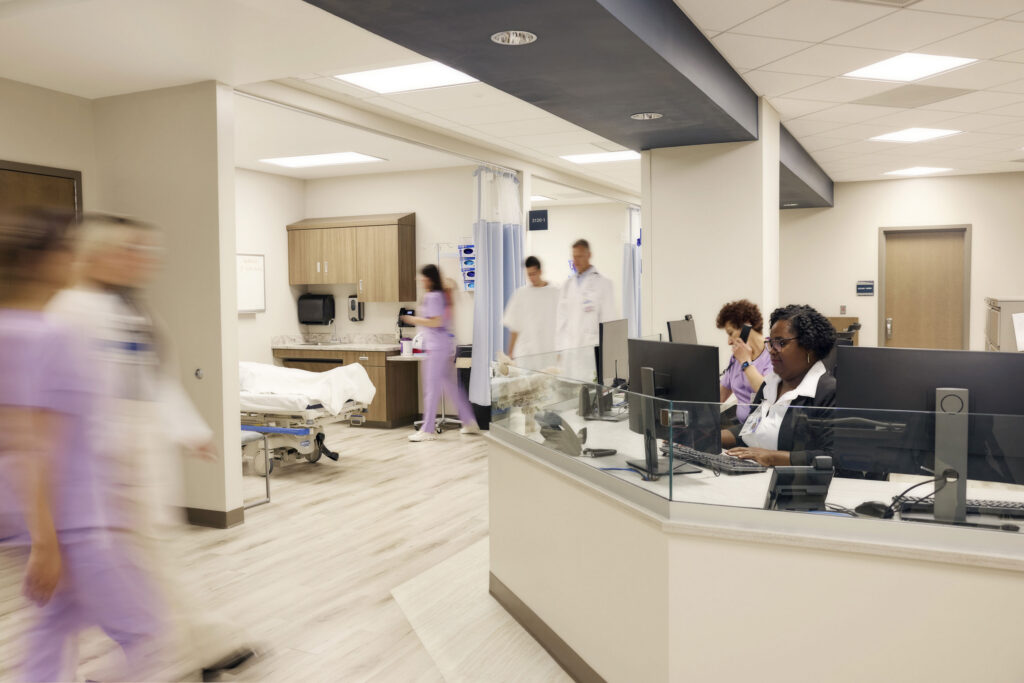
The numbers behind the risk.
Workplace violence in healthcare isn’t a background risk — it’s a daily operational reality. These figures reflect both the scale of the problem and what changes when ROAR is in place.
4x
More likely for healthcare workers to face workplace violence than any other industry.
— Bureau of Labor Statistics
< 3
Median alert-to-response time in minutes across ROAR-protected facilities.
39%
Reduction in patient-on-staff incidents within 3 months of ROAR deployment at BeWell Health.
Zero
Staff location or audio data collected — ever. Privacy by design, not policy. No PHI stored.
Why hospitals choose ROAR.
Most duress systems assume a perfect building, a live network, and staff who stay put. ROAR assumes none of those things and built a solution around that.
Works in dead zones
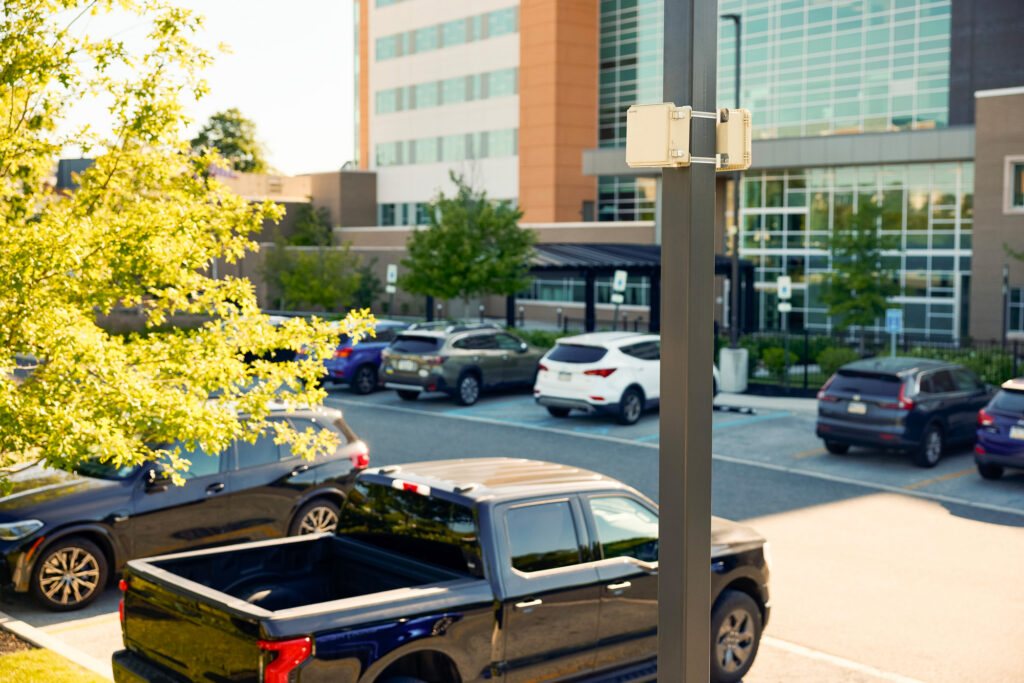
Bluetooth mesh propagates alerts peer-to peer via strategically placed beacons. Stairwells, basements, and shielded radiology suites are covered — no Wi-Fi dependency, no signal blackouts.
Cyberattack-resilient
The device network operates independently of your IT infrastructure. For most hospitals, this is the deciding factor — your duress system stays up when ransomware takes everything else down.
Privacy by design
No GPS. No audio. No ambient tracking. Staff know exactly what is — and isn’t — collected. Unions accept it. Staff trust it. That’s the difference.
Identical at any scale
The same platform and the same wearable runs a 900-bed flagship and a 12-room satellite clinic. One contract, one vendor relationship, one training program across your entire system.
Audit-ready out of the box
Incident logs, response times, and alert data are reportable for Joint Commission review, state workplace violence prevention mandates, and Board safety reporting without custom configuration.
A partner, not a product
We don’t just ship devices. We get you live. ROAR plans the rollout, configures the system, trains your team, and stays past go-live — so safety becomes a habit, not a tool that sits unused.
Customer story:
Cutting violent incidents 39% at BeWell
When CCTV blind spots and a slow incident-response process were escalating violence against staff, BeWell turned to ROAR’s silent wearable buttons — worn by staff, backed by concealed overhead beacons, with no dead zones to exploit. In a three-month pilot, staff-patient incidents dropped 39%, satisfaction rose from 57% to 73%, and workers’ comp claims fell 24% — a return on investment in under six months. BeWell expanded facility-wide within 90 days.
From the flagship to the
12-room satellite.
One platform. One wearable. Every care setting your organization operates.
- Acute care: ED, ICU, med-surg, behavioral health units — highest-acuity coverage across your main campus.
- Ambulatory & clinic: Smaller footprint, same protection. No infrastructure rebuild required for satellite sites.
- Behavioral health: Discreet form factor staff will actually wear. No visible panic button stigma on the unit floor.
- Home health: LTE-connected protection follows your nurses into patient homes, beyond your campus perimeter.
- Senior living: Resident-optional and staff-mandatory modes — flexible deployment across memory care and skilled nursing.
Moments your clinical staff know too well.
Help arrives in seconds. Every time. These aren’t edge cases. They’re Tuesday afternoon.

EMERGENCY DEPARTMENT
Escalating patient in medication line
A patient refuses his meds. The nurse can’t reach the wall panel. She presses the ROAR button. The mesh network carries the alert through the building in mere seconds — no Wi-Fi, no radio, no yelling down the hall.
Outcome: Security reaches the ED in 47 seconds. Patient de-escalated. Incident logged automatically.
STAIRWELL DEAD ZONE
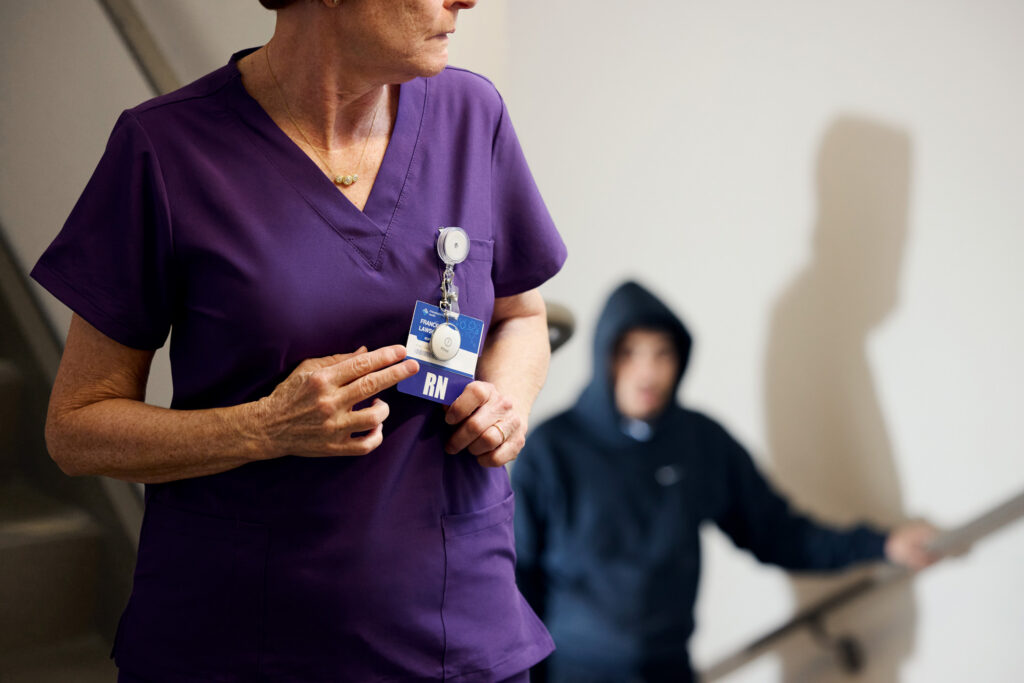
Stalking in the stairwell where Wi-Fi doesn’t reach
A nurse at a behavioral health center is climbing the back staircase when she hears someone behind her. She presses her ROAR button as she moves to the next floor. The BLE mesh network works where Wi-Fi signals break, keeping track of her location so security knows exactly where to go. Help is already waiting as she opens the door on the fifth floor.
Outcome: Security dispatches within 10 seconds. Location is confirmed. The RN gets the help she needs in 73 seconds.
BEHAVIORAL HEALTH UNIT
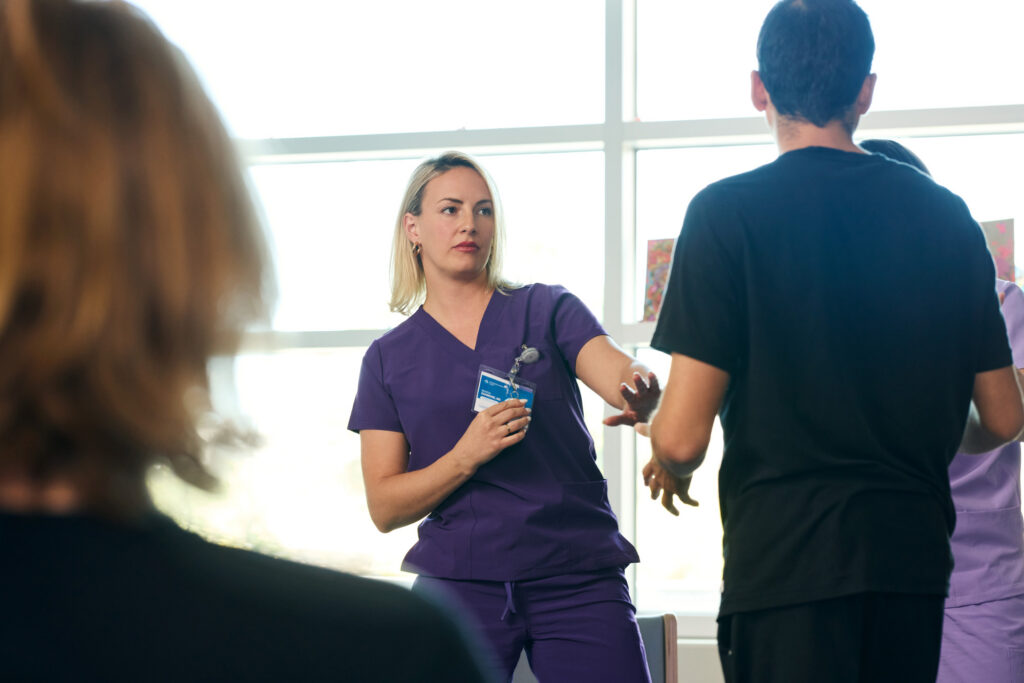
De-escalation on the ward, radio in the cradle
Two staff are managing a patient in distress. A third needs backup now, but her radio was left charging at the nurses’ station. She activates her ROAR button. The right team mobilizes before the situation escalates further.
Outcome: Three-person response in 61 seconds. No physical restraint required.