
-

Silent Panic Alert Technology: How Discreet Activation Works in Healthcare Settings
Key Takeaways Silent panic alert technology sends a duress signal without any sound, vibration, or visible cue that the aggressor can detect. In clinical settings, that silence isn’t a limitation.…
-

Wireless Duress Alarm Systems: What to Know Before You Buy
Key Takeaways “Wireless” is the most misleading word in duress alarm marketing. Every vendor uses it. Most buyers hear it and assume it means independence from their facility’s infrastructure. But…
-

Duress Alarm Systems for Hospitals: Architectures Compared
Key Takeaways Four duress alarm architectures show up in every hospital evaluation. They share a demo-room pitch: press a button, get help fast. They don’t share the same network path,…
-

Staff Assist Buttons for Hospitals: What They Do and What They Miss
Key Takeaways A staff assist button is the simplest duress device you can deploy. Mount it under a desk, connect it to an alert system, and responders know exactly where…
-

Duress Badges for Healthcare Staff: Activation Methods and What to Test
Key Takeaways You’ve decided on a wearable duress badge for your staff. That’s the right call for mobile clinical teams who move across rooms, floors, and buildings throughout a shift.…
-
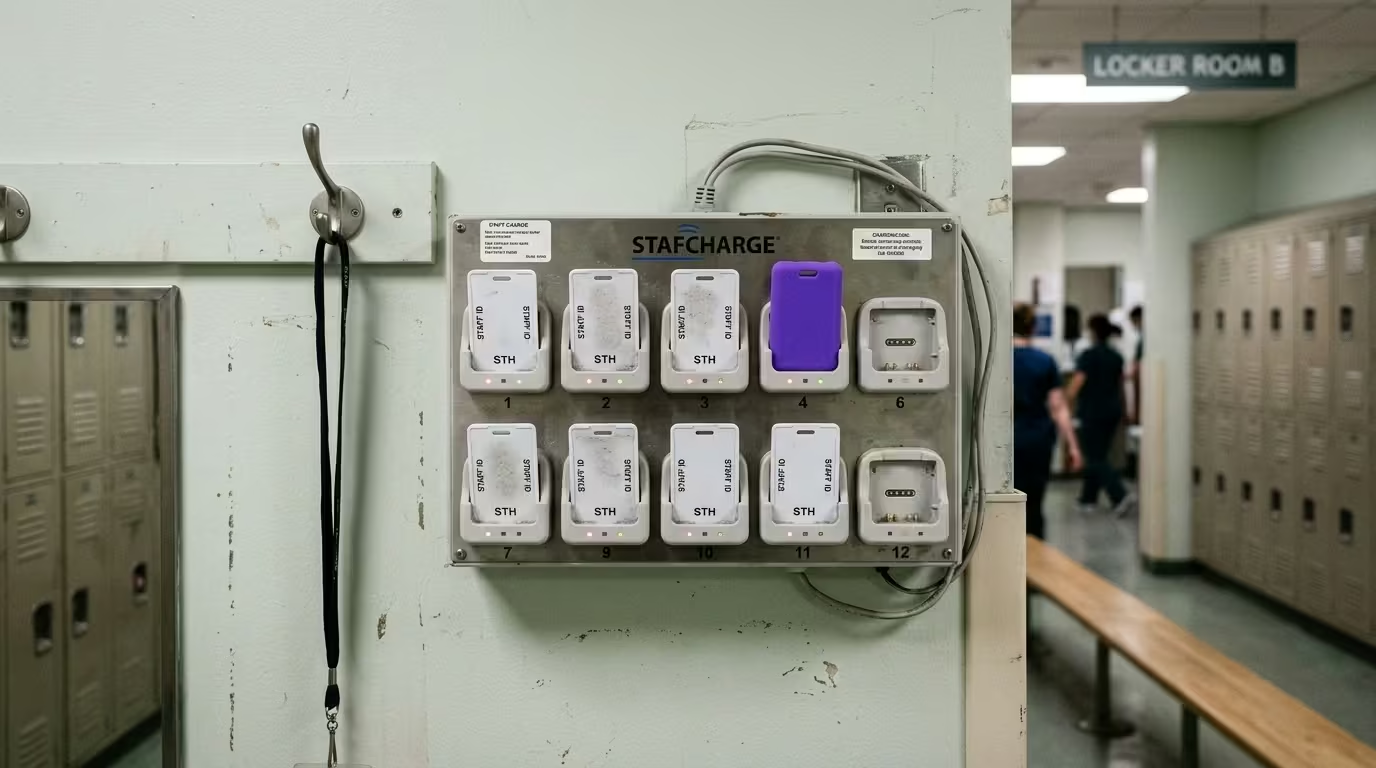
Healthcare Duress Alerting Systems: What to Evaluate Before You Buy
Key Takeaways Most of what you’ll evaluate wasn’t built for this. These systems started as asset trackers or patient monitors, and the panic button got added later. That matters more…